“We Have to Become the No. 1 Christmas Movie.” Olena Antonova on Starlight Production’s First Film
A year from the first conversation to the film set. Around a hundred Ukrainian films analyzed. Up to ten ideas at the start, five script drafts — and Christmas that had to be recreated in the middle of summer, in +35°C heat.
The team of Starlight Production’s First Studio, which has spent years working on major television formats, took a new step — producing Starlight Production’s first feature film.
The result was the Christmas comedy Two Christmases, One Lesia, starring Lesia Nikitiuk.
After filming wrapped, we spoke with Olena Antonova, Director of Starlight Production’s First Studio and the film’s lead producer, about why our production company decided to make its own film, why a Christmas comedy was chosen as the first project, the challenges the team faced during filming, and whether there are already ideas for future films.
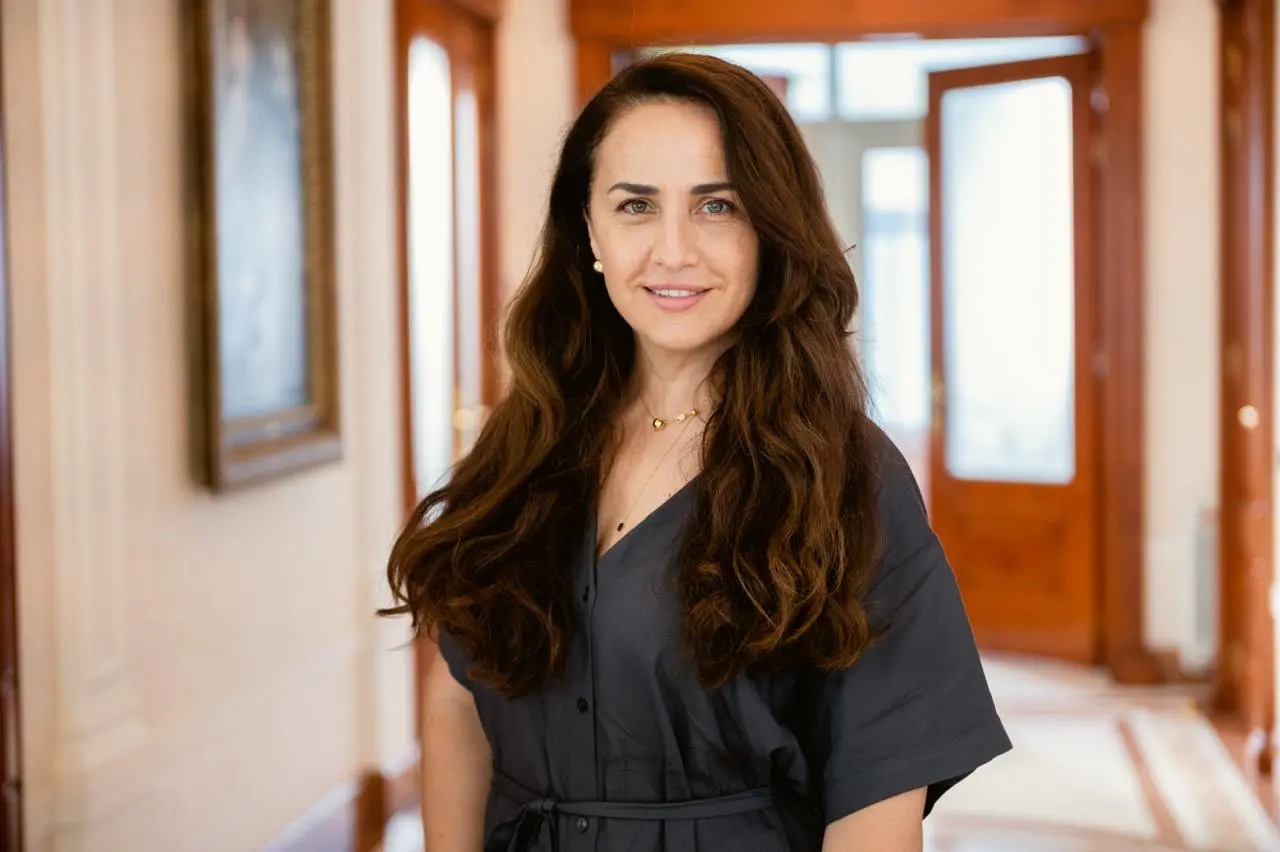
Olena Antonova, Director of Starlight Production’s First Studio and lead producer of the film
— Let’s start with the decision itself. Why did Starlight Production decide to enter film production in the first place?
Developing new content formats and expanding into multiple genres was one of Starlight Production’s strategic priorities. We were looking at what other products we could create and how we could broaden our expertise beyond traditional television production.
We also had many discussions about this with Vitalii Husiev, CEO of Starlight Production. That is how the idea emerged to enter film production and create a product distributed not only on television channels, but also in cinemas.
This is a new direction for Starlight Production, and I would not call it an experiment. It was a deliberate decision made after extensive market analysis.
— So even the genre of the first film was chosen based on data?
Yes. We conducted our own research, literally gathering information ourselves on the performance of films produced by different companies — both leading market players and smaller ones.
Overall, we analyzed around 100 films released over the past five years. Comedies ranked among the most-watched titles, particularly those featuring well-known stars.
One such example is Pesyky, created with the support of Novyi Kanal, in which Lesia Nikitiuk made a successful feature-film debut. That is why Lesia also became part of our film.
Event-driven films were also among the top performers, which led us to the decision to make a Christmas comedy. The choice was very carefully considered and supported by data.

Lesia Nikitiuk on the set of Two Christmases, One Lesia
— When you started working on the story itself, did you look at what works successfully abroad?
We focused more on understanding what Ukrainian audiences are looking for. Even in television formats, we now see cases where a project may be hugely successful abroad but perform differently in Ukraine. People here perceive content differently and have different preferences.
In my view, there is currently strong demand in Ukraine for comedy — for something light and entertaining that helps people unwind. Ukrainians need an opportunity to take their minds off the war, even if only for a couple of hours.
At the same time, audiences need authentic character stories that create a sense of warmth and humanity. That is why we deliberately chose a different tone for this Christmas comedy from the comedies and sitcoms we had produced before. We introduced more of a warm comedy approach — a kind of comedy where you can empathize with the characters and experience a broad range of emotions.
For me, a good result would be if people can laugh while watching the film and perhaps even cry at certain moments. The film should touch them emotionally and offer a sense of release. For Ukrainians today, that is extremely important.
— And if we move from emotions to production KPIs, what benchmark did you set for your first film?
The goal is very simple: we have to become the No. 1 film by audience numbers over the Christmas period.
I understand that the competition will be strong and that major players will also have films in cinemas. But this is the ambitious goal we have set for ourselves. We also want to achieve significant reach on OTT platforms — definitely to make the top five.
That is the producer’s goal. Success is measured by audience numbers, box office performance, and financial results.
For me personally, the audience’s response to the messages we have built into the film is also important. I want people to genuinely relax and enjoy themselves while watching it. After all, this is an entertainment film.
— How much time passed between the initial idea and the first day of filming?
A year. That is normal for film production, although we were ready to start sooner. We spent some time waiting for funding to be approved. So, in our case, approximately a year passed between the first discussion of the idea and the start of filming.
— This is your first feature film as a producer. What turned out to be completely different from what you had imagined before starting the project?
A lot of things. Of course, we brought in people with film production experience for every key position. We have a highly professional team, and their expertise gave me enormous support. But personally, this was my first experience, so I learned a great deal along the way.
By the end of filming, I realized that filmmaking is a craft that can be learned and understood. The main thing is not to be afraid to pursue your goal.
As for something I had definitely imagined differently: we originally wanted to shoot the film in winter, in January or February. Then perhaps we would not have had to create artificial snow and cover the entire area around the house with it.
— You have spent many years producing large-scale television formats. What surprised you most about filmmaking compared with television?
Almost everything, actually.
Television projects and studio shows can also have long pre-production periods. For example, for Who’s on Top?, Who Wants to Be a Millionaire? or The Field, teams prepare questions and materials and work through a huge number of details. But there is still a significant amount of improvisation from hosts and participants on camera. We create certain circumstances for people, and then they live within them, interact with one another, and play.
Actors in films can also bring something of their own to a role, but for the story to work, the script has to be polished literally down to the last letter, tested, and redrafted many times.
If something has not been done well enough at the script stage, once you are on set there is no easy way to simply steer things in another direction. And that is one of the major differences between filmmaking and studio shows.
Another thing that felt magical to me in film production was the actors’ performances — the way they create a particular state and emotion within a scene.
I also want to say that, without exaggeration, Lesia showed herself to be a professional actress in our film. She already had previous feature-film experience. She trained in acting with a coach and approached the project very responsibly and professionally overall. I am confident that audiences will be pleasantly surprised.
— Let’s move on to the practical side: Christmas, snow, and +35°C outside. How difficult was it to create winter in the middle of summer?
That question would probably be better addressed to Andrii Savchenko, the film’s producer. (Laughs.)
Technically, it is possible. In filmmaking, winter scenes are shot in summer and summer scenes in winter. The real question is the budget.
When you shoot in winter, daylight hours are shorter, so outdoor scenes may require more shooting days. In summer, the shooting day is longer and you can film more exterior scenes, but then you have to cover the house and everything around it in artificial snow.
I think that, all things considered, scenes involving artificial snow can cost roughly 35% more.
Of course, this applies only to several exterior scenes rather than the entire film — we shot most of it indoors. Once we realized that filming was being moved from winter to summer, we deliberately reduced the number of exterior scenes in the script to limit the amount of artificial-snow work required.
But on screen, it looks incredibly beautiful. It is pure magic. In a sense, the people who create it are magicians.
— After completing your first feature film, do you already have a list of things you would not repeat when working on the next one?
To be honest, I do not know yet. This is my first experience. I need to go through the entire journey, all the way to the film’s theatrical release. Perhaps I need to do it another two or three times, working with different teams, stories, and ideas.
— Is there one rule you already know you will carry into your next project?
You have to choose an idea that genuinely excites you personally. Me, specifically. And one that resonates with society at that particular moment.
Ideally, that energy should be shared across the entire team: the creator of the idea, the producer, and the director should genuinely believe that the story is strong and that it will work. Then that energy comes together and drives everyone forward.
Film production comes with many challenges. The larger and more expensive the project, the greater the responsibility, the more unexpected situations arise, and the more obstacles you face. You can overcome them when you truly believe in the idea and its quality, and understand why you are doing it.
So my advice applies not only to films, but also to series, shows, and any other genre: choose projects that genuinely excite you and that you truly love. That gives you the energy to overcome obstacles and keep moving towards the goal while creating something with its own energy and perspective on life.
— A project of this scale always has a large team behind it. Who would you especially like to highlight?
That is an unfair question. :) We really do have an amazing team, so I do not want to single out just one person.
Yura Mykulenko wrote the story and kept rewriting it — there were around five drafts in total. At the very beginning, we had around ten different ideas developed with Lesia Nikitiuk in mind, and we selected among them together with Novyi Kanal.
Sasha Tkachenko, the former General Producer of Novyi Kanal, was also involved in the process from the very beginning. We had many discussions and considered numerous options before settling on this particular story.
I would also especially like to highlight Vitalii Husiev, CEO of Starlight Production. His role was extremely important during the preparation and launch of the project — particularly in ensuring that the film received the necessary funding and could move from an idea into production.
Our entire team consists of highly skilled professionals. That is exactly why I do not want to single out any one person.
— It sounds like Starlight Production has no intention of stopping after its first film. What comes next?
We already have an adventure film written called Mazepa: Shadow Over Kyiv.
It is a film for young audiences in which Mazepa is not presented as a boring historical figure from a textbook. We want to bring his story into pop culture and show a young, 16-year-old Mazepa — before he became a legend.
He is a teenager just like any other, with his own stories and problems, but he is more ambitious and determined. We are interested in the environment that shaped him and gave him the impetus to become the person he eventually became. In other words, we are exploring a period in the life of a legend before he himself realized who he was.
We are currently discussing future films and new ideas with our distribution partners, Green Light Films. I think that, in time, I will be able to share our plans for next year.
Audiences will be able to see how Starlight Production’s first feature film turned out this winter.

Lesia Nikitiuk on the set of Two Christmases, One Lesia
🎬 The Christmas comedy Two Christmases, One Lesia is set to premiere on January 1, 2027.
Last news
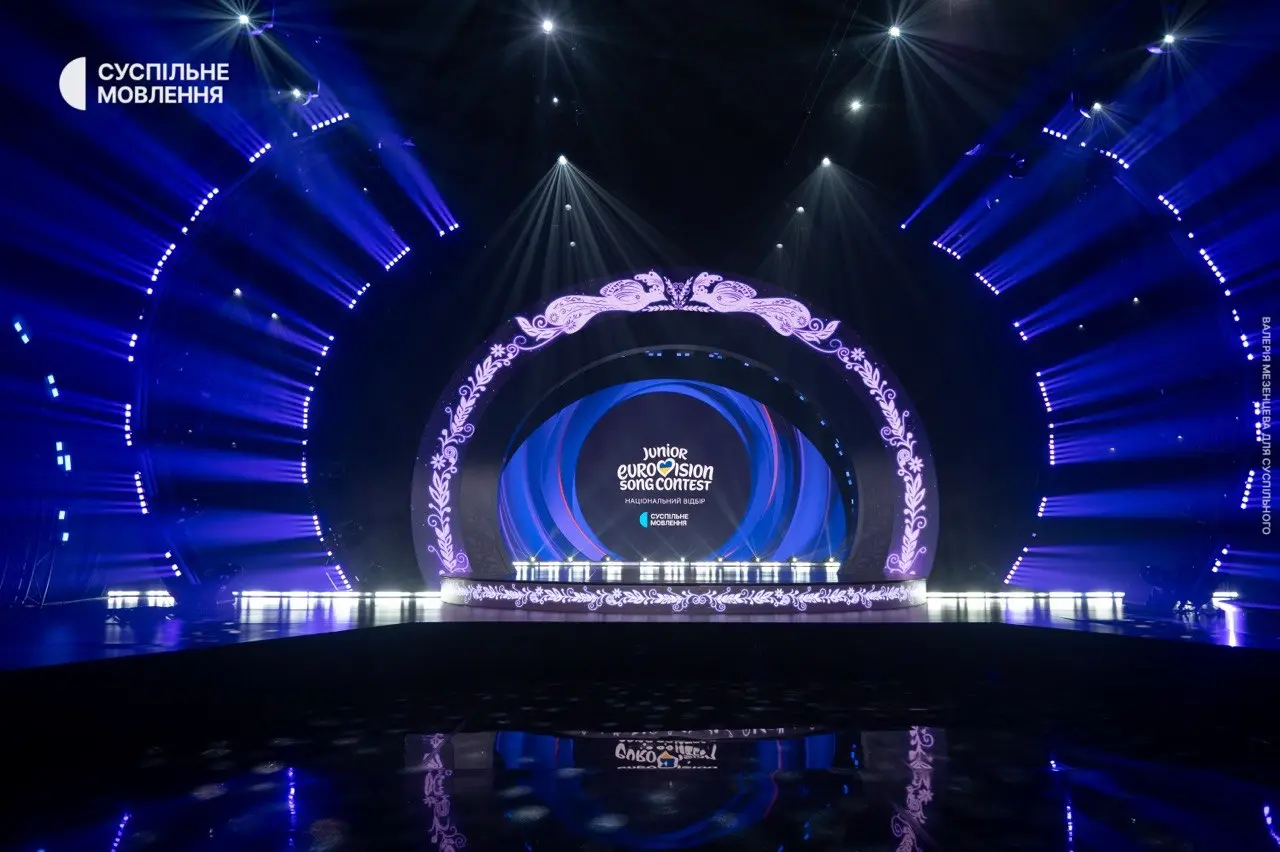
Starlight Scenery served as the official contractor for the production and installation of the set for the Junior Eurovision National Selection final show
The 15th season of The Bachelor will be available on Netflix in Ukraine 🌹
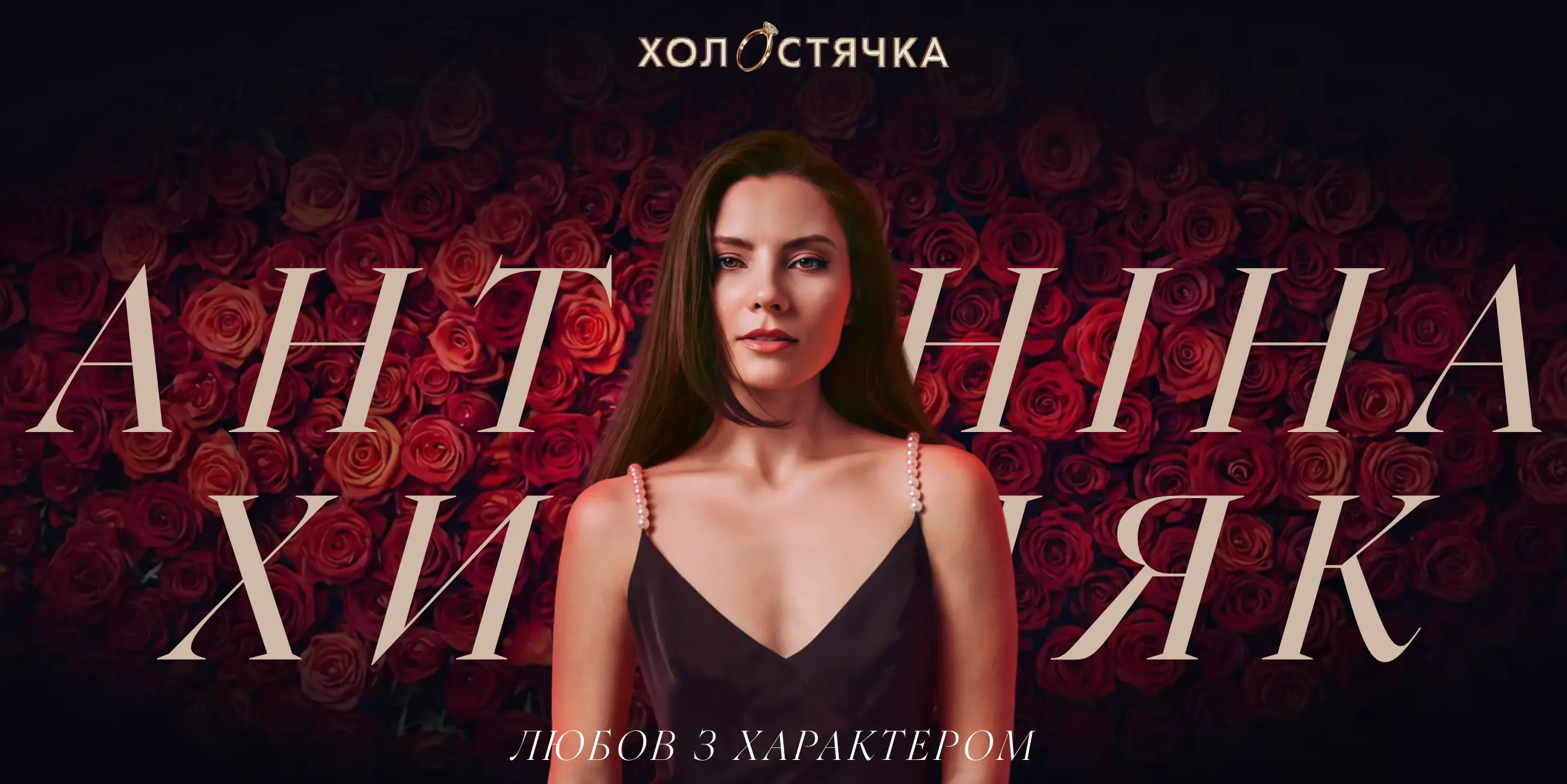
“The Bachelorette” is back — and this time, things are about to get seriously hot!